Follow Me On Social Media!

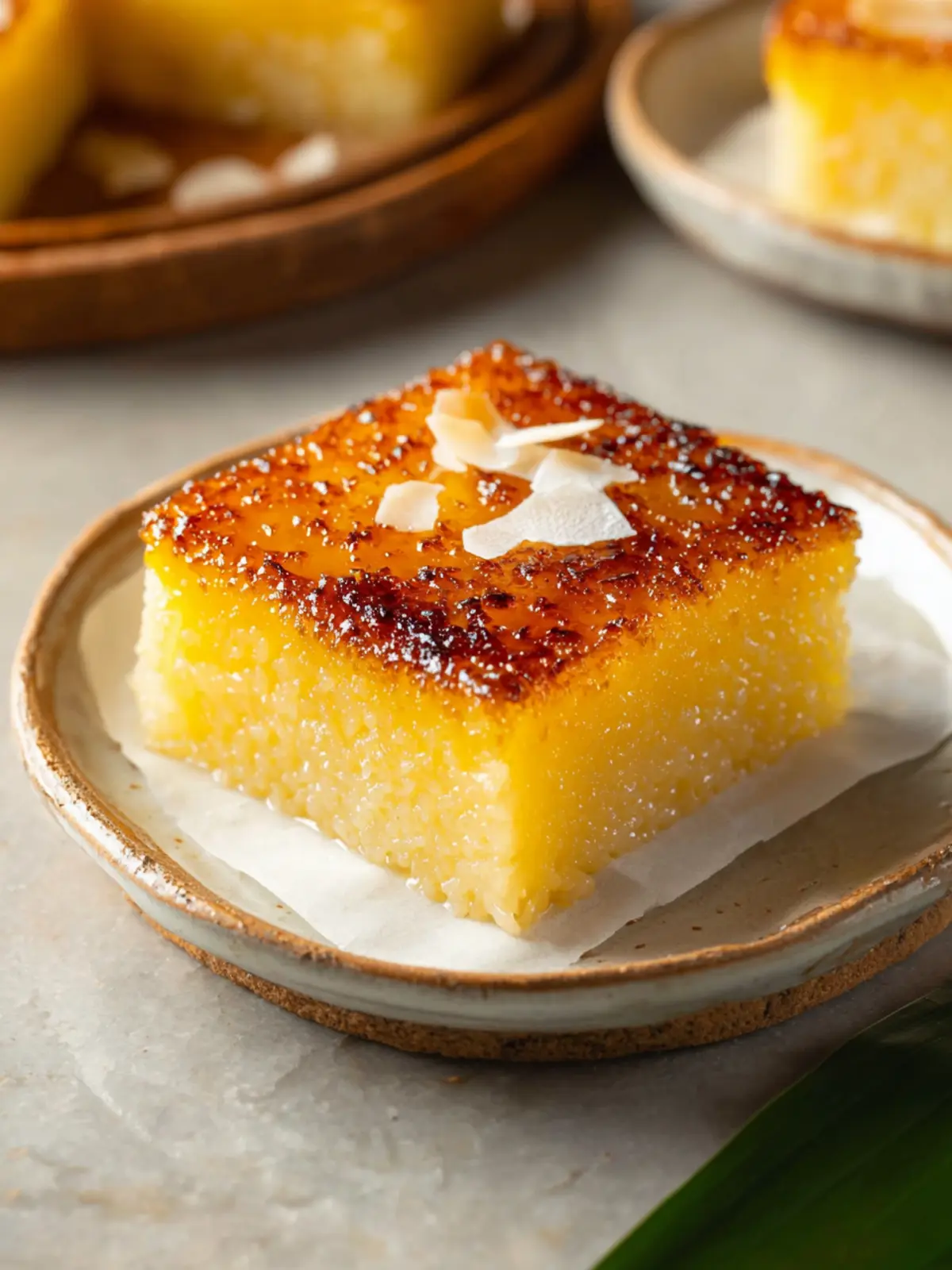
Authentic Filipino Cassava Cake: Indulgent Flavor Awaits

Introduction to Authentic Filipino Cassava Cake
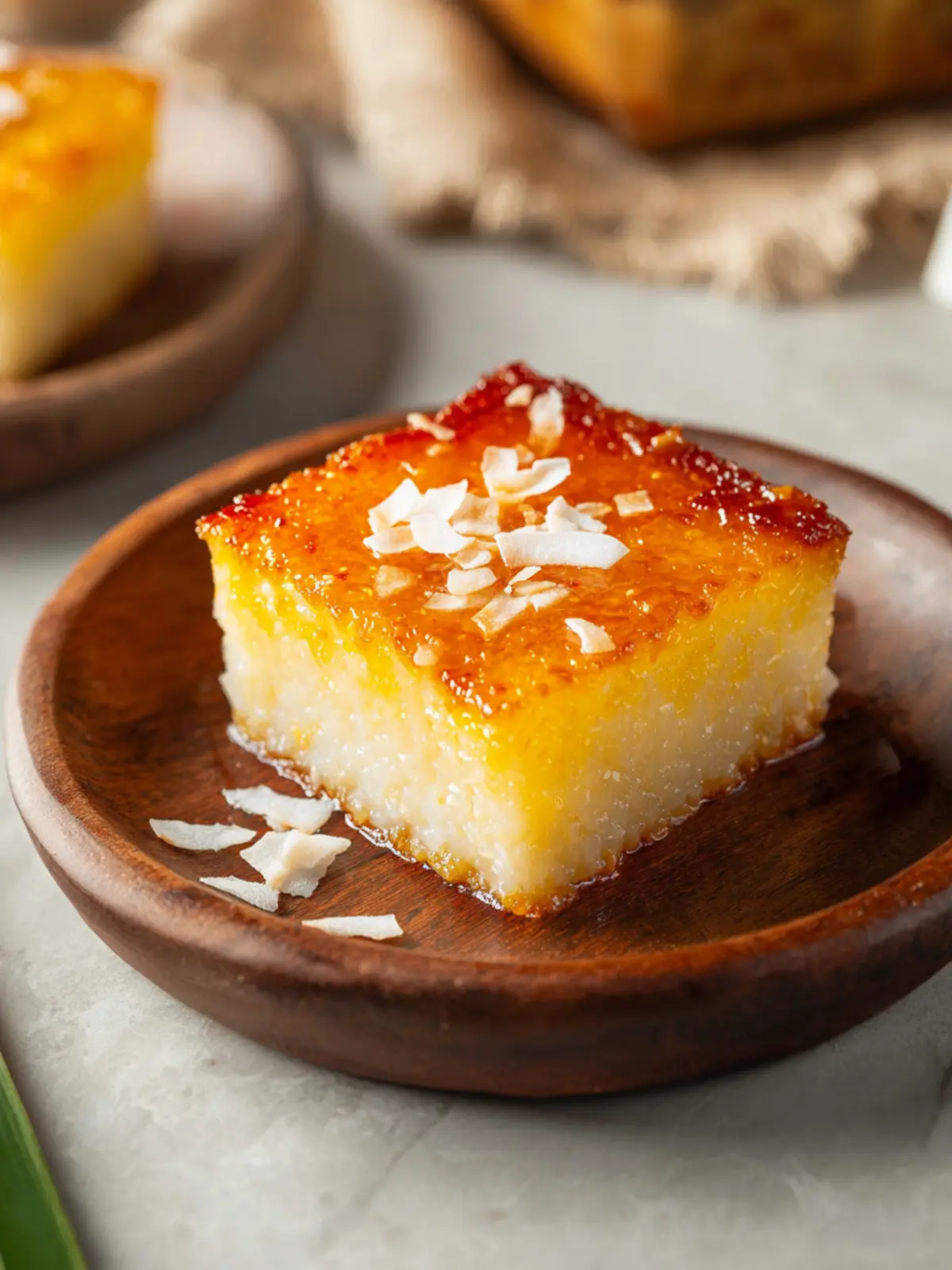
Embracing the rich culinary heritage of the Philippines, authentic Filipino cassava cake serves as more than just a dessert; it embodies family traditions, communal gatherings, and cherished memories around the table. The aroma of freshly baked cassava cake often fills the kitchens of Filipino households, evoking nostalgia and a sense of belonging. This delightful cake is made from cassava, a starchy root vegetable that’s not only versatile but also gluten-free, making it a popular choice for dessert lovers of all backgrounds. Imagine the first bite: a moist, chewy texture coated in a sweet, creamy topping that dances on your palate, transporting you to festive occasions and warm family gatherings.
What Makes Cassava Cake a Beloved Treat?
The allure of authentic Filipino cassava cake lies in its unique blend of flavors and textures. It’s a staple at birthdays, Christmas, and various Filipino celebrations, serving as a heartfelt reminder of culture and heritage. But what truly sets this cake apart?
-
Cultural Significance: Cassava cake isn’t just a dessert; it’s deeply ingrained in Filipino culture. Families gather to celebrate life’s milestones with this sweet treat, symbolizing unity and joy.
-
Simple Ingredients with Wholesome Flavors: The recipe typically features cassava, coconut milk, sugar, and eggs, all of which come together to create a dessert that’s both simple and satisfying. Each ingredient plays its part, enhancing not just the taste but also the overall experience of eating this cake.
-
Versatility: Whether enjoyed as a mid-afternoon snack or served at a festive feast, cassava cake adapts well to any occasion. It can be served warm or cold, and can even be customized with various toppings or additional flavors, such as cheese or ube, to suit different palates.
This authentic Filipino cassava cake is not just about the taste; it’s about cherished connections, love for tradition, and the joy of sharing something special with those you hold dear. When you take a moment to enjoy a piece, you’re not merely savoring a slice of cake—you’re celebrating the spirit and heart of the Filipino community.
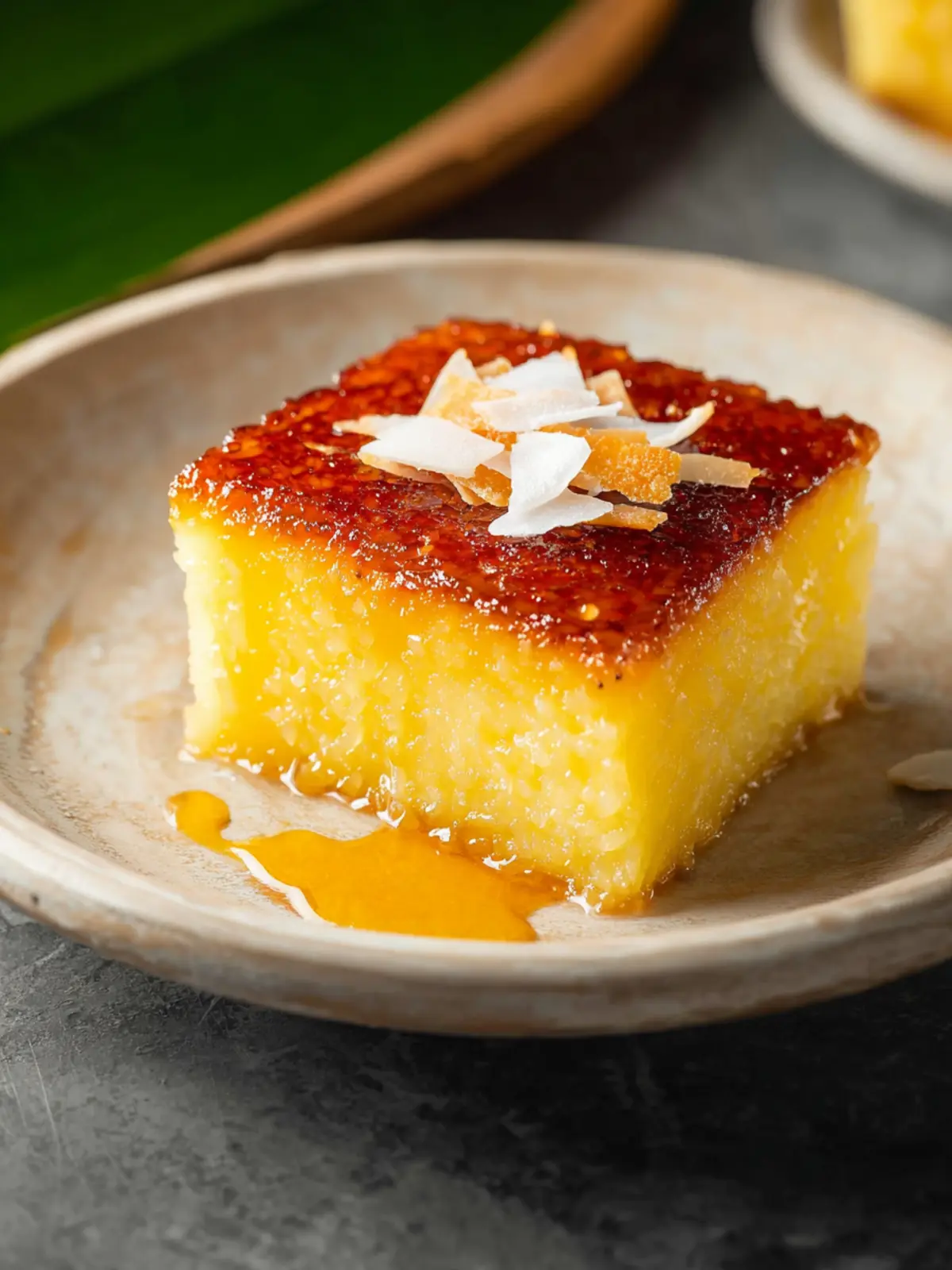
Key Ingredients for Authentic Filipino Cassava Cake
Cassava: The star of authentic Filipino cassava cake is, of course, cassava itself. This root vegetable is rich in starch, giving the cake its unique chewy texture and subtle sweetness. Fresh cassava is preferred if you can find it, but you can also use frozen grated cassava. Just make sure to thaw it completely and drain excess moisture for the best results.
Coconut Milk: A key component that brings a creamy richness to our cake. I use rich, full-fat coconut milk for its flavor and texture. It melds beautifully with the cassava and makes the cake incredibly moist. If you’re looking for a lighter option, you can try low-fat coconut milk, but the flavor will be less intense.
Sugar: I like to use a combination of granulated sugar and brown sugar. The granulated sugar adds sweetness, while the brown sugar imparts a subtle caramel flavor that enhances the overall taste of the cake.
Eggs: The binding agent in this delightful dessert, eggs provide structure. Whipping them well helps the cake rise slightly, leading to that light and fluffy texture that is so appealing.
Baking Powder: A small but significant addition, baking powder provides a bit of lift to the cake, making it less dense than one might expect from a cassava-based dessert.
Vanilla Extract: A splash of vanilla extract rounds out the flavors beautifully, giving depth and a hint of warmth to each bite. It pairs perfectly with the coconut and cassava, elevating the entire experience.
These simple yet essential ingredients come together to create a dish that’s not just a dessert but a slice of Filipino culture. Enjoy making your own authentic Filipino cassava cake!
Why You’ll Love This Authentic Filipino Cassava Cake
The moment you take a bite of this authentic Filipino cassava cake, you’re not just experiencing a dessert; you’re tasting a piece of history. Known as “kakanin” in the Philippines, cassava cake is often served during celebrations, and its rich flavors have a way of transporting you straight to a bustling Filipino party.
This cake is not only delicious but also a versatile indulgence that can complement any occasion, from cozy family gatherings to more festive events. Here are a few reasons that highlight why you’ll embrace this delightful treat:
-
Unique Flavor Profile: Made with fresh grated cassava, this cake boasts a slightly nutty and sweet flavor that is hard to resist. The combination of coconut milk and condensed milk enhances the richness, creating a luxurious texture that’s creamy yet dense.
-
Simplicity and Tradition: The recipe is straightforward, requiring minimal ingredients. This ease of preparation allows you to bond with family and friends as you whip up this beloved dish together, just as generations have done before.
-
Texture That Delights: The cake’s chewy but tender consistency sets it apart from most traditional cakes, making every bite an experience worth savoring.
So, whether you’re familiar with authentic Filipino cassava cake or it’s your first time, this recipe is bound to become a cherished addition to your culinary repertoire.
Variations of Cassava Cake
Authentic Filipino Cassava Cake is such a versatile dessert that it naturally lends itself to a variety of exciting twists. When sharing this beloved treat with friends and family, why not make it special with your own signature spin? Here are some delicious variations to try:
Ube Cassava Cake
Imagine the vibrant purple hue of ube, a popular root vegetable in Filipino cuisine! By incorporating ube extract or ube halaya into your authentic Filipino cassava cake, you’ll not only add a pop of color but also a unique sweet flavor that many adore.
Coconut Cream Topping
Coconut lovers will rejoice with this variation. Elevate your cassava cake by pouring a rich coconut cream topping over it just before serving. A simple mix of coconut milk, egg, and sugar baked until golden enhances the cake’s flavor and offers a creamy finish.
Chocolate Delight
Feeling adventurous? Blend in some cocoa powder for a decadent chocolate twist. This variation creates a moist, chocolatey treat that’s perfect for occasions or simply satisfying a chocolate craving.
Fruit-Infused Cassava Cake
You can also elevate the cake by folding in bits of fruits like mango, pineapple, or even raisins. They not only add sweetness and texture but also provide a burst of flavor that complements the cassava beautifully.
These variations showcase the adaptability of the authentic Filipino cassava cake, inviting you to experiment and find your favorite way to enjoy this traditional treat. What variation do you think you’ll try first?
Cooking Tips and Notes
Creating an authentic Filipino cassava cake is a delightful journey into traditional cooking. Whether you’re familiar with the flavors of the Philippines or trying this recipe for the first time, here are some tips to elevate your cassava cake experience.
Choosing Your Cassava
Always opt for fresh cassava when possible. Look for roots that are firm and smooth. Fresh cassava lends a more robust flavor compared to frozen options. If using frozen, make sure it’s properly thawed and drained to avoid excess moisture.
Coconut Milk Matters
For the best depth of flavor, I highly recommend using full-fat coconut milk. It enriches the cake and contributes to that delightful creaminess. If you’re watching calories, light coconut milk can be a substitute, but it may yield a less decadent result.
Texture is Key
Be mindful of the texture when grating the cassava. A fine grater will create a smoother cake, while a coarser grater will add a bit of bite. Choose based on your preference; both methods are delicious.
Baking Time Precision
Each oven is different, so keep an eye on your cake as it bakes. It’s done when it’s golden brown on top and a toothpick inserted into the center comes out clean. Overbaking can lead to a dry cake, so set a timer and check early!
Incorporating these insider tips will help ensure your authentic Filipino cassava cake turns out just as it should—delicious, moist, and packed with traditional flavor. Happy baking!
Serving Suggestions for Cassava Cake
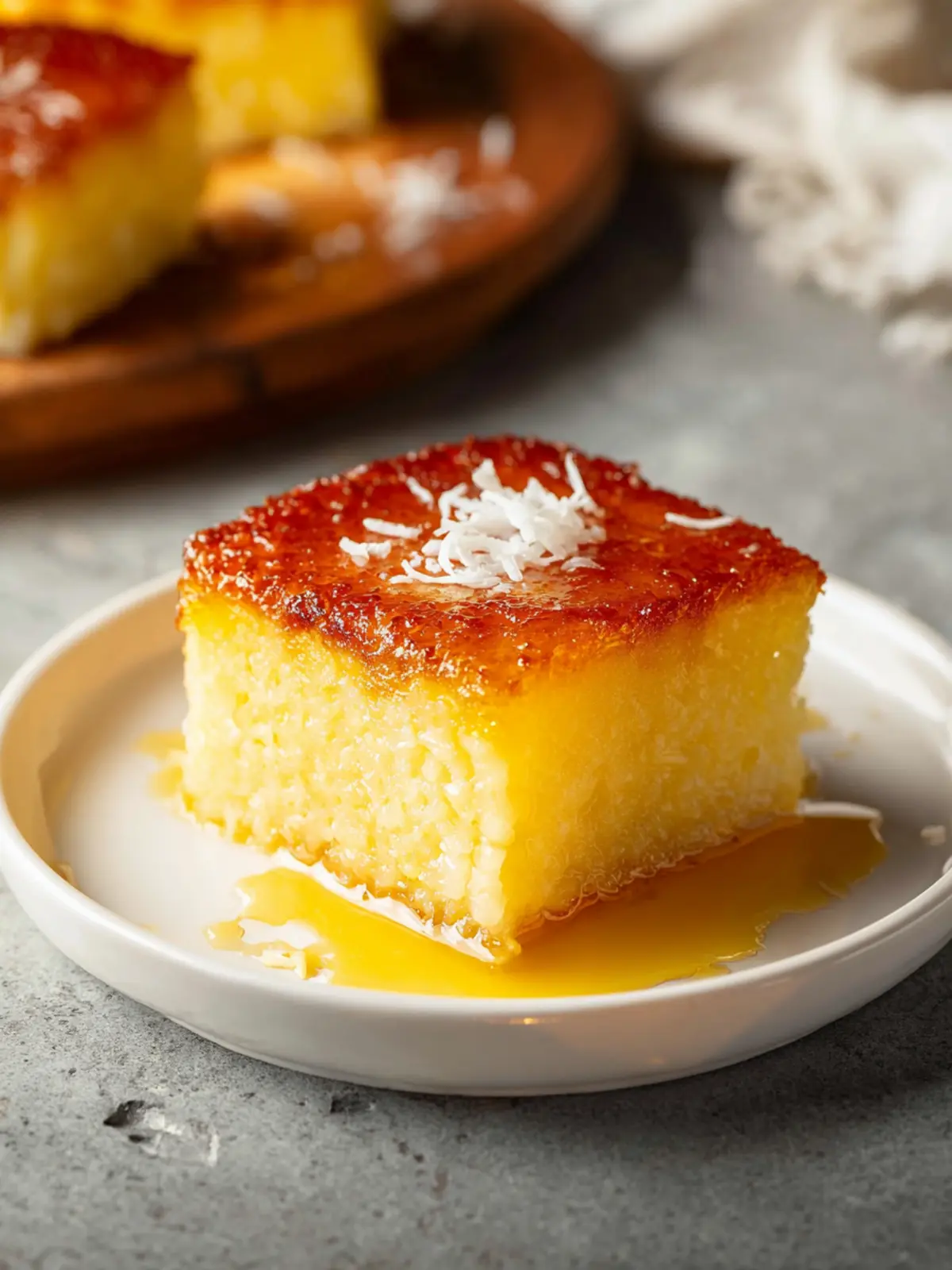
There’s something undeniably comforting about serving an authentic Filipino cassava cake—its sweet aroma wafting through the kitchen evokes memories of family gatherings and celebrations. While this delectable cake can certainly stand on its own, there are many ways to enhance your serving experience.
-
Fresh Coconut Cream: Drizzle some freshly made coconut cream on top for a rich and velvety texture. It complements the cake perfectly, adding a refreshing contrast.
-
Fruits: Consider garnishing with tropical fruits like mango or ripe bananas. Not only do they add a pop of color, but the sweetness of the fruits balances the cake’s texture beautifully.
-
Ice Cream: For a delightful twist, serve warm cassava cake with a scoop of vanilla ice cream. The creaminess melts into the cake, creating an indulgent treat.
-
Coffee or Tea: Pair your serving with a warm cup of coffee or tea. The warmth of the drink will complement the cake’s sweet, chewy texture wonderfully.
With these serving suggestions, your authentic Filipino cassava cake will be the star of any gathering, inviting everyone to come back for seconds!
Time Breakdown for Making Cassava Cake
Making an authentic Filipino cassava cake is a delightful experience that allows you to connect with a rich culinary tradition. Understanding the time commitment can help you plan better, whether you’re preparing for a family gathering or simply craving a delicious dessert.
Preparation Time
Set aside about 15-20 minutes for preparation. This includes grating the cassava, mixing your ingredients, and readying your baking pan.
Baking Time
Once your mixture is ready, pop it into the oven for approximately 45-50 minutes. You’ll want to keep an eye on it to ensure it turns a beautiful golden brown.
Total Time
In total, you’re looking at about an hour to an hour and 10 minutes from start to finish. It’s a small investment for a treat that’s bound to impress!
Nutritional Facts for Cassava Cake
Exploring the delightful world of authentic Filipino cassava cake not only unveils its rich cultural significance but also provides insights into its nutritional profile. This delicious treat is perfect for any occasion, and understanding its nutritional facts can help you enjoy it mindfully.
Calories
A typical serving of cassava cake contains about 180 to 250 calories, depending on the specific recipe and portion size. This makes it a wonderful dessert option that’s both satisfying and not overly heavy.
Protein
The protein content in cassava cake is relatively low, ranging from 2 to 5 grams per serving. While it’s not a significant source of protein, pairing it with a protein-rich beverage can create a more balanced snack.
Carbohydrates
Being made primarily from cassava, this cake is high in carbohydrates, with around 30 to 40 grams per serving. These carbs provide energy, making it a great post-workout treat or a delightful way to fuel your day!
FAQs about Authentic Filipino Cassava Cake
Finding the perfect authentic Filipino cassava cake recipe can be a delight, but once you’ve baked that delicious treat, you might have some questions about preserving its flavor and texture. Let’s dive into some frequently asked questions that can help you enjoy your cassava cake weeks after it’s baked.
What is the best way to store cassava cake?
To keep your authentic Filipino cassava cake fresh, store it in an airtight container at room temperature, especially if you plan to eat it within a couple of days. If it’s particularly warm and humid, refrigeration might be a better option to prevent spoilage. Be sure to cover the cake with plastic wrap or foil to maintain its moisture.
How long does cassava cake last?
When properly stored, your cassava cake can last about 4–5 days at room temperature and up to a week in the refrigerator. After about a week, it may start to lose its texture and flavor, so it’s best to enjoy it fresh!
Can I freeze cassava cake?
Absolutely! Freezing is a great option if you want to prolong the life of your cake. Slice the cake into portions, wrap each piece tightly in plastic wrap, and place them in a freezer-safe bag. When you’re ready to indulge, simply thaw it in the refrigerator or at room temperature. Enjoying a slice of frozen cassava cake is like having a taste of the Philippines right at your fingertips!
What can I serve with cassava cake?
While authentic Filipino cassava cake is delicious on its own, it pairs wonderfully with a scoop of vanilla ice cream or a drizzle of coconut cream for added richness. You can also serve it alongside fresh fruit or a warm cup of coffee for a delightful afternoon treat. Each of these options elevates the cake and complements its flavors in a unique way.
Conclusion on Authentic Filipino Cassava Cake
Creating an authentic Filipino cassava cake is more than just a recipe; it’s a celebration of culture, tradition, and the comforting flavors of home. This delightful dessert is rich, moist, and absolutely enchanting with its combination of cassava, coconut milk, and condensed milk. Whether it’s for a special occasion or a simple family gathering, this cake is bound to bring joy to your table and hearts alike. So, gather your ingredients, embrace the cooking process, and enjoy sharing this delightful culinary gem with your loved ones. After all, every slice is a story waiting to be shared!
Print
Cassava Cake
- Total Time: 1 hour 10 minutes
- Yield: 6 servings 1x
- Diet: Vegetarian
Description
A delightful cassava cake with a creamy topping.
Ingredients
Scale
- 1 lb cassava
- 1 egg
- ½ cup coconut milk
- ½ can evaporated milk
- ½ can condensed milk
- 2 tbsp melted butter
- ¼ cup coconut milk
- ¼ cup condensed milk
- 1 egg yolk
- ½ tbsp corn starch
- 2 tbsp shredded coconut
Instructions
- Preheat your oven to 350F/175C.
- Peel and finely grate the cassava root using the grater side.
- In batches, place the grated cassava into a sieve and squeeze out as much of its liquid as you can.
- Transfer to a bowl. You should end up with approximately 2 cups of cassava.
- Add the egg, coconut milk, evaporated milk, condensed milk, and butter. Mix until fully incorporated.
- Grease a 10”x6” baking sheet or pan with some butter, covering the sides as well.
- Pour the batter into one flat layer.
- Transfer to the oven and bake for 45-50 minutes.
- Meanwhile, prepare the topping. Add ¼ cup coconut milk, ¼ cup condensed milk, 1 egg yolk, and corn starch to a bowl. Whisk until combined.
- Once the cassava cake has fully baked and firmed up, take it out of the oven.
- Pour the topping over the cake and return the baking dish/pan to the oven for 15 minutes until the top is bubbly and golden.
- Set the cake aside and let it cool completely.
- Cut into 6 squares using a sharp knife.
- Plate it up and garnish each slice with some shredded coconut.
Notes
- Ensure the cassava is well drained for the best texture.
- Serve cold or at room temperature for the best flavor.
- Prep Time: 20 minutes
- Cook Time: 50 minutes
- Category: Dessert
- Method: Baking
- Cuisine: Tropical
Nutrition
- Serving Size: 1 square
- Calories: 250
- Sugar: 15g
- Sodium: 50mg
- Fat: 10g
- Saturated Fat: 6g
- Unsaturated Fat: 4g
- Trans Fat: 0g
- Carbohydrates: 35g
- Fiber: 2g
- Protein: 4g
- Cholesterol: 60mg